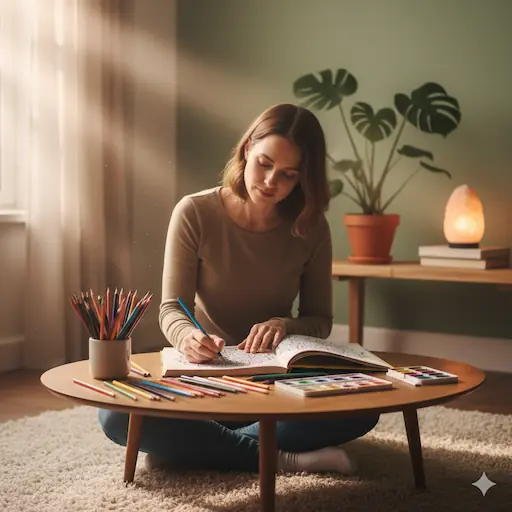
Mindfulness Coloring for Adults: Finding Peace in a Busy World
Learn how mindfulness coloring helps adults reduce stress, improve focus, and bring calm into their daily routines.
Mindfulness Coloring for Adults
In recent years, adults have rediscovered the simple joy of coloring—not just as a nostalgic pastime but as a legitimate mindfulness practice. What was once considered child's play has evolved into a respected self-care activity embraced by millions of adults worldwide. The adult coloring book phenomenon that began around 2015 wasn't just a passing trend; it represented a collective recognition that we all need accessible ways to disconnect from our digital lives and find moments of calm.
Why Adults Have Embraced Mindfulness Coloring
Adults have flocked to mindfulness coloring for compelling reasons. In our hyperconnected world, coloring offers a rare opportunity to engage in a screen-free activity that requires just enough focus to quiet the mental chatter without demanding excessive mental energy. The repetitive, structured nature of coloring creates a meditative state similar to what's achieved in formal mindfulness practices.
Many adults report that coloring helps them "turn off" their analytical thinking and activate different parts of their brain associated with creativity and sensory experience. This mental shift provides a valuable respite from the problem-solving and decision-making that dominates most of our waking hours.
Unlike many other hobbies, coloring has a low barrier to entry—it requires minimal supplies, no special talent, and can be picked up or set down at a moment's notice. This accessibility makes it particularly appealing to busy adults who might otherwise struggle to incorporate creative activities into their lives.
Workplace Stress Management
Forward-thinking companies have begun incorporating coloring activities into their wellness programs, recognizing the benefits for employee mental health and productivity. Some organizations provide coloring materials in break rooms or include coloring sessions during lunch hours or team-building events.
Healthcare workers, who face particularly high levels of workplace stress, have reported significant benefits from brief coloring sessions between shifts. A 15-minute coloring break can help reset mental fatigue and provide emotional regulation before returning to demanding tasks.
Remote workers have also found mindfulness coloring helpful for creating boundaries between work and personal time. Taking a short coloring break can serve as a transition ritual, helping the mind shift gears when physical commutes no longer provide that separation.
Incorporating Coloring into Self-Care Routines
Many adults integrate coloring into their broader self-care practices, creating rituals that enhance the mindfulness aspects of the activity:
- Morning mindfulness: Starting the day with 10-15 minutes of coloring while enjoying morning coffee, setting a calm tone before diving into emails and responsibilities
- Evening wind-down: Coloring as part of a bedtime routine, helping to signal to the brain that it's time to transition from productivity to rest
- Stress circuit-breaker: Keeping coloring materials accessible during the workday to use during moments of overwhelm or between challenging tasks
- Mindful pairing: Combining coloring with other sensory experiences like listening to calming music, using essential oils, or enjoying a favorite tea
The beauty of coloring as self-care lies in its flexibility—it can be adapted to fit any schedule, from brief five-minute sessions to extended periods of creative focus.
Coloring Groups and Community Aspects
What began as a solitary activity has evolved into a social phenomenon as well. Coloring groups meet in libraries, community centers, and cafes, creating spaces for people to connect while engaging in a calming activity together. These gatherings offer the dual benefits of mindfulness practice and social connection.
Virtual coloring communities have flourished on social media platforms, where members share their completed pages, techniques, and the personal meaning they find in different designs. These online spaces provide encouragement and inspiration while normalizing coloring as a legitimate adult activity.
Some mental health professionals and wellness coaches facilitate guided coloring sessions, incorporating intentional breathing exercises, gentle prompts for reflection, or themes that encourage emotional exploration through color choices and patterns.
Types of Coloring Pages Adults Prefer
Adult preferences in mindfulness coloring pages tend to differ significantly from children's coloring materials:
- Intricate mandalas: These circular, symmetrical designs have roots in spiritual traditions and naturally draw the colorist into a meditative state through their repeating patterns
- Nature-inspired designs: Detailed botanical illustrations, landscapes, and animal motifs connect adults with the natural world while providing complex patterns to engage with
- Abstract patterns: Geometric designs, zentangles, and kaleidoscope patterns offer endless creative possibilities without the pressure of staying within realistic color schemes
- Word and affirmation pages: Designs incorporating positive phrases or inspirational quotes allow adults to literally color their values and reinforce positive thinking
- Architectural scenes: Detailed cityscapes, famous buildings, and intricate interior designs appeal to adults who appreciate structural precision and historical elements
The level of detail in adult coloring pages is purposeful—complex designs require more attention and focus, enhancing the mindfulness aspect by making it nearly impossible to ruminate on worries while concentrating on tiny spaces and pattern decisions.
With platforms like Colorise, adults can now create custom mindfulness coloring pages that align perfectly with their personal preferences, whether that means transforming their own photographs into coloring templates or generating unique designs based on specific themes that resonate with them.
The Science Behind Adult Coloring and Stress Reduction
Research has begun to validate what many adults intuitively experience—that coloring can be a powerful tool for stress reduction and mental well-being. Studies have shown that engaging in structured coloring activities can:
- Lower cortisol levels (the body's primary stress hormone)
- Reduce symptoms of anxiety and depression
- Improve focus and concentration
- Promote better sleep quality
- Enhance overall emotional well-being
One study published in the Journal of the American Art Therapy Association found that just 20 minutes of coloring significantly reduced anxiety levels in participants. The researchers noted that the structured nature of coloring helps to focus the mind and create a sense of control—a particularly valuable benefit in our often chaotic modern lives.
Research from Harvard Health and Harvard Health Blog: The Thinking Benefits of Doodling further support the benefits of coloring and mindfulness practices in reducing stress and improving mental health. Mayo Clinic also highlights these benefits in their article on Coloring Is Good for Your Health, and their Mindfulness Through Coloring blog post provides additional support for incorporating coloring into stress management and cognitive wellness routines.
Getting Started with Mindfulness Coloring
If you're new to mindfulness coloring, here are some simple steps to begin your practice:
- Gather basic supplies: Start with a few colored pencils, markers, or gel pens and a coloring book or printable pages
- Create a comfortable space: Find a quiet spot with good lighting where you can relax without interruptions. For tips on setting up a mindful environment, see Creating a Mindfulness Coloring Environment.
- Set an intention: Before you begin, take a moment to set an intention for your coloring session—whether it's relaxation, stress relief, or creative expression
- Focus on the process: Pay attention to the sensations of coloring—the sound of the pencil on paper, the movement of your hand, the emergence of colors
- Be kind to yourself: Remember, there's no right or wrong way to color. The goal is the experience, not the end result
Conclusion
Mindfulness coloring for adults is more than a pastime—it's a proven tool for reducing stress, improving focus, and creating moments of calm in a busy world. Explore our related guides on Mindfulness Coloring for Kids, Science of Mindfulness Coloring, and Creating a Mindfulness Coloring Environment to deepen your practice.